
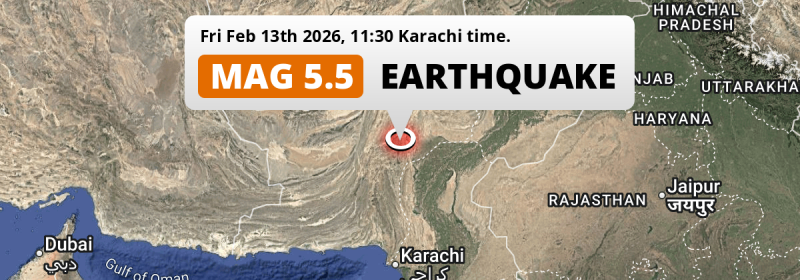
Under land 79 kilometer from Khuzdar in Pakistan, a shallow and significant Magnitude 5.5 earthquake occurred around noon of Friday February 13th, 2026. Roughly 15 million people may have felt this earthquake.
Felt the earthquake? Share this article: 


Earthquake Summary
The earthquake struck on land in Pakistan, 79 kilometer (49 mi) north-east of Khuzdar in Balochistan. The center of this earthquake had a very shallow depth of 10 km. Shallow earthquakes usually have a larger impact than earthquakes deep in the earth.
| Date and Time: | Feb 13, 2026 11:30 (Karachi Time) - Feb 13, 2026 06:30 Universal Time. |
|---|---|
| Location: | 79 km NE of Khuzdar, Balochistan, Pakistan. Coordinates 28°19'13"N 67°10'49"E. |
| Map: | 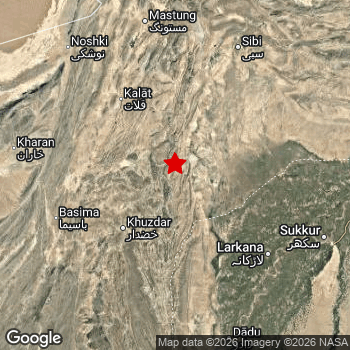 Map of area around epicenter. Click to open in Google Maps. |
| Magnitude: | MAG 5.5 Detected by 119 stations. Maximum Error Range ±0.054 . |
| Depth: | 10 km (6 mi) A very shallow depth. |
| Max. Intensity: | VII
Very Strong On the Modified Mercalli Scale. |
| Tsunami Risk: | Tsunami very unlikely While this was a shallow earthquake, it appears to have occurred under land with a magnitude not strong enough to cause tsunami's. Always stay cautious - More info here. |
Minimal impact predicted
Based on scientific estimates by the US Geographic Survey (USGS), the risk of high fatalities for this earthquake is classified at level GREEN (low). They expect an 65% likelyhood of between 0 and 1 fatalities, and a 96% chance that the number of fatalities falls no higher than 10.
The USGS classifies the economic impact of this earthquake at level GREEN (low). They expect an 80% likelyhood of between 0 and 1 million US Dollars in economic damage and impact, and a 98% chance that the economic impact of this earthquake falls no higher than 10 million USD.
Roughly 15 million people exposed to shaking
This earthquake may have been felt by around 15 million people. That is the expected population size of the area exposed to a level of shaking of II or higher on the Modified Mercalli scale according to the USGS.
An estimated 460 people were exposed to level VII. At this level, very strong shaking and likely moderate damage can be expected. Intensity level III was experienced by the majority of people (around 9 million). In their region, weak shaking and probably no damage can be expected.
People in 2 countries have been exposed to shaking. Roughly 15 million people were exposed to shaking in Pakistan , with level VII (very strong shaking, likely moderate damage) as the highest recorded. People were exposed to shaking in Afghanistan as well.
| People | MMI Level | Shaking | Damage |
|---|---|---|---|
| 0 | I |
Not noticable | None |
| 14,280 | II |
Very weak | None |
| 9,408,000 | III |
Weak | Probably none |
| 5,175,000 | IV |
Light | Likely none |
| 64,700 | V |
Moderate | Very light |
| 1,380 | VI |
Strong | Light |
| 460 | VII |
Very Strong | Moderate |
| 0 | VIII |
Severe | Moderate to heavy |
| 0 | IX |
Violent | Heavy |
| 0 | X |
Extreme | Very heavy |
Nearby towns and cities
This earthquake may have been felt in Pakistan . Located 79 kilometer (49 mi) north-east of the epicenter of this earthquake, Khuzdar (Balochistan, Pakistan) is the nearest significant population center. Khuzdar experienced an earthquake intensity (MMI Scale) of roughly IV. That level implies light shaking and likely no damage.
Multiple large cities are in proximity of today's earthquake. Quetta is located 208 km to the north (intensity unknown, possibly low). Larkana is located 132 km to the south-east and experienced an intensity of IV (light shaking, likely no damage). Sukkur is located 179 km to the east-southeast and experienced an intensity of III (weak shaking, probably no damage).
The table below provides an overview of all places in proximity of today's earthquake. Where available, the estimated intensity on the Modified Mercalli Intensity Scale in each place is included. Places where this information is omitted likely experienced little impact.
Overview of nearby places
| Distance | Place | Intensity (MMI) |
|---|---|---|
| 79 km (49 mi) SW from epicenter |
Khuzdar Balochistan, Pakistan. |
IV
Light |
| 86 km (53 mi) E from epicenter |
Usta Muhammad Balochistan, Pakistan. |
IV
Light |
| 86 km (53 mi) ESE from epicenter |
Mehrabpur Balochistan, Pakistan. |
IV
Light |
| 89 km (55 mi) SE from epicenter |
Shahdad Kot Sindh, Pakistan. |
IV
Light |
| 97 km (60 mi) NW from epicenter |
Kalat Balochistan, Pakistan. |
IV
Light |
| 114 km (71 mi) SSE from epicenter |
Warah Sindh, Pakistan. |
IV
Light |
| 115 km (71 mi) SE from epicenter |
Kambar Sindh, Pakistan. |
IV
Light |
| 123 km (76 mi) E from epicenter |
Jacobabad Sindh, Pakistan. |
IV
Light |
| 123 km (76 mi) ESE from epicenter |
Ratodero Sindh, Pakistan. |
IV
Light |
| 127 km (79 mi) SE from epicenter |
Nasirabad Sindh, Pakistan. |
IV
Light |
| 132 km (82 mi) SE from epicenter |
Larkana Sindh, Pakistan. |
IV
Light |
| 136 km (85 mi) NNE from epicenter |
Dadhar Balochistan, Pakistan. |
IV
Light |
| 137 km (85 mi) SE from epicenter |
New Badah Sindh, Pakistan. |
IV
Light |
| 137 km (85 mi) ESE from epicenter |
Naudero Sindh, Pakistan. |
IV
Light |
| 142 km (88 mi) SSE from epicenter |
Mehar Sindh, Pakistan. |
IV
Light |
| 146 km (91 mi) SSE from epicenter |
Goth Radhan Sindh, Pakistan. |
IV
Light |
| 147 km (91 mi) SSE from epicenter |
Khairpur Nathan Shah Sindh, Pakistan. |
IV
Light |
| 149 km (93 mi) ESE from epicenter |
Shikarpur Sindh, Pakistan. |
III
Weak |
| 152 km (94 mi) NNE from epicenter |
Sibi Balochistan, Pakistan. |
III
Weak |
| 156 km (97 mi) E from epicenter |
Thul Sindh, Pakistan. |
III
Weak |
| 158 km (98 mi) SSE from epicenter |
Sita Road Sindh, Pakistan. |
IV
Light |
| 163 km (101 mi) ESE from epicenter |
Pir Jo Goth Sindh, Pakistan. |
III
Weak |
| 168 km (104 mi) NNW from epicenter |
Mastung Balochistan, Pakistan. |
III
Weak |
| 170 km (106 mi) SE from epicenter |
Gambat Sindh, Pakistan. |
III
Weak |
| 172 km (107 mi) N from epicenter |
Mach Balochistan, Pakistan. |
III
Weak |
| 173 km (107 mi) SE from epicenter |
Hingorja Sindh, Pakistan. |
III
Weak |
| 173 km (107 mi) SE from epicenter |
Kandiaro Sindh, Pakistan. |
III
Weak |
| 174 km (108 mi) SE from epicenter |
Ranipur Sindh, Pakistan. |
III
Weak |
| 175 km (109 mi) W from epicenter |
Kharan Balochistan, Pakistan. |
III
Weak |
| 177 km (110 mi) SE from epicenter |
Setharja Old Sindh, Pakistan. |
III
Weak |
| 177 km (110 mi) NW from epicenter |
Nushki Balochistan, Pakistan. |
III
Weak |
| 178 km (111 mi) ESE from epicenter |
Khairpur Mir’s Sindh, Pakistan. |
III
Weak |
| 179 km (111 mi) SSE from epicenter |
Tharu Shah Sindh, Pakistan. |
III
Weak |
| 179 km (111 mi) ESE from epicenter |
Sukkur Sindh, Pakistan. |
III
Weak |
| 182 km (113 mi) ESE from epicenter |
Rohri Sindh, Pakistan. |
III
Weak |
| 186 km (116 mi) SE from epicenter |
Kot Diji Sindh, Pakistan. |
III
Weak |
| 186 km (116 mi) SSE from epicenter |
Dadu Sindh, Pakistan. |
III
Weak |
| 186 km (116 mi) SSE from epicenter |
Johi Sindh, Pakistan. |
III
Weak |
| 187 km (116 mi) E from epicenter |
Ghauspur Sindh, Pakistan. |
III
Weak |
| 189 km (117 mi) SSE from epicenter |
Naushahro Firoz Sindh, Pakistan. |
III
Weak |
| 196 km (122 mi) ESE from epicenter |
Pano Aqil Sindh, Pakistan. |
III
Weak |
| 196 km (122 mi) E from epicenter |
Kandhkot Sindh, Pakistan. |
III
Weak |
| 201 km (125 mi) SSE from epicenter |
Moro Sindh, Pakistan. |
III
Weak |
| 208 km (129 mi) N from epicenter |
Quetta Balochistan, Pakistan. |
|
| 210 km (130 mi) N from epicenter |
Kot Malik Barkhurdar Balochistan, Pakistan. |
|
| 212 km (132 mi) E from epicenter |
Ghotki Sindh, Pakistan. |
|
| 221 km (137 mi) SSE from epicenter |
Sehwan Sindh, Pakistan. |
|
| 235 km (146 mi) E from epicenter |
Mirpur Mathelo Sindh, Pakistan. |
|
| 261 km (162 mi) SSE from epicenter |
Nawabshah Sindh, Pakistan. |
|
| 288 km (179 mi) E from epicenter |
Saddiqabad Punjab, Pakistan. |
|
| 297 km (185 mi) NNW from epicenter |
Chaman Balochistan, Pakistan. |
Earthquake Intensity Map
The intensity in shaking and damage by this earthquake is illustrated through the map below. The highest intensity measured for this earthquake is VII.
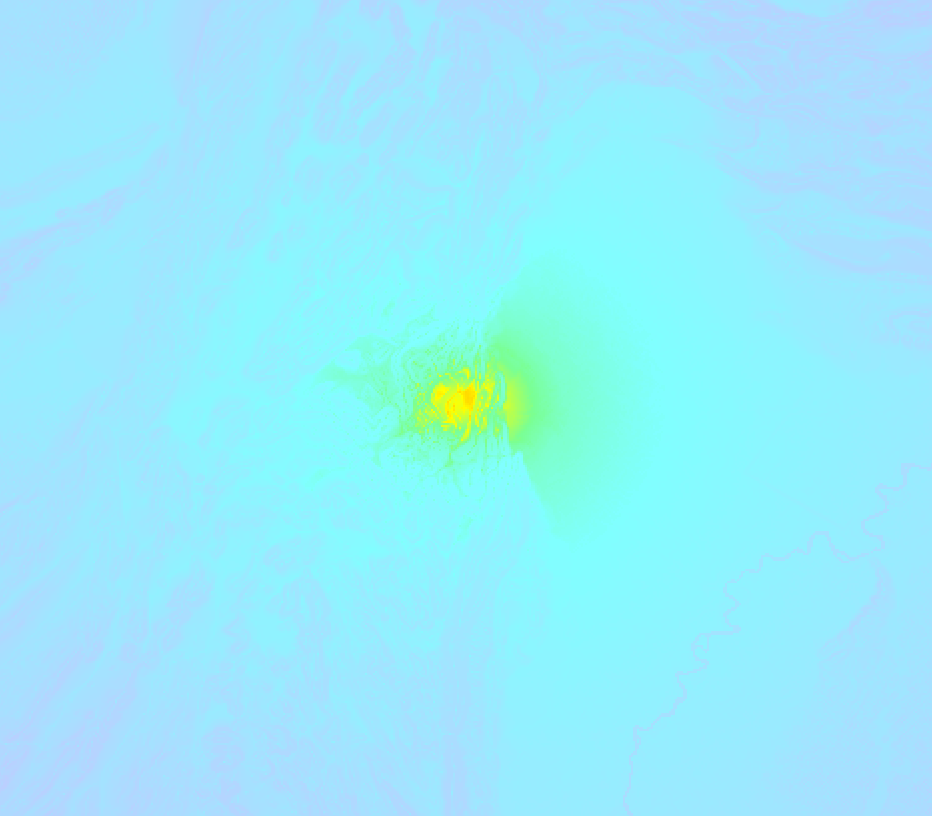
Shaking reported by 1 person
People that feel an earthquake may report their experience to the US Geographic Survey. Currently, 1 person has reported shaking in one place in Pakistan.We keep updating this article as more ground reports become available. You may report that you felt this earthquake here.
Places with most reports:
- Jacobabad, Sind, Pakistan: 1 person.
Risk of aftershocks?
This earthquake did not have any significant foreshocks nor aftershocks occurring within 100km (62 mi) of its epicenter.
The risk of aftershocks decreases rapidly over time. Usually, aftershocks are at least one order of magnitude lower than a main shock.
In only six percent of cases, significant earthquakes are followed by a larger main shock, making the current earthquake a foreshock. While the chance of this happening is not so large, it is adviced to maintain cautiousness in the hours and days following a major earthquake.
Read: How to Stay Safe during an Earthquake (cdc.gov).Earthquakes like this are common in the region
Earthquakes of this strength occur quite regularly in the region. This is the strongest earthquake to hit since March 19th, 2024, when a 5.5 magnitude earthquake hit 232 km (144 mi) further northwest. An even stronger magnitude 5.9 earthquake struck on October 6th, 2021.
In total, 6 earthquakes with a magnitude of 5.5 or higher have been registered within 300km (186 mi) of this epicenter in the past 10 years. This comes down to an average of once every 2 years.
Tsunami very unlikely
While MAG-6.5+ earthquakes may cause tsunami's, it appears that the epicenter of this earthquake hit under land. In addition, the reported depth is deeper than 100km, making the risk of a tsunami even less likely. However always stay cautious and monitor advice from local authorities.
Tsunami Risk Factors
| Factor | Under Sea? | MAG-6.5 or stronger? | Shallow depth? |
|---|---|---|---|
| Explanation | Almost all tsunami's are caused by earthquakes with their epicenter under sea or very near the sea. However stay cautious in coastal areas as earthquakes on land may cause landslides into sea, potentially still causing a local tsunami. | Under MAG 6.5: Very unlikely to cause a tsunami. MAG 6.5 to 7.5: Destructive tsunami's do occur, but are uncommon. Likely to observe small sea level changes. MAG 7.6+: Earthquakes with these magnitudes might produce destructive tsunami's. |
Most destructive tsunami's are caused by shallow earthquakes with a depth between 0 and 100km under the surface of the earth. Deeper tsunami's are unlikely to displace to ocean floor. |
| This Earthquake | Not this earthquake. This earthquake appears to have struck on land far from any coast. |
Not this earthquake. This earthquake had a magnitude of 5.5. Earthquakes of this strength are unlikely to trigger a tsunami. |
This earthquake occurred at a depth of of 10 km (6 mi). Earthquakes this shallow could trigger a tsunami. |
Sources
Last updated 18/02/26 05:58 (). As more information on this earthquake becomes available this article will be updated. This article is automatically composed based on data originating from multiple sources.
- US Geographic Society (USGS): Earthquake us6000s8pw
- European-Mediterranean Seismological Centre (EMSC): Earthquake 20260213_0000092
- Geonames.org: World Cities Database
- Google Maps: Static API
- Earthquakelist.org: Historic Earthquakes Database
Share this article:
